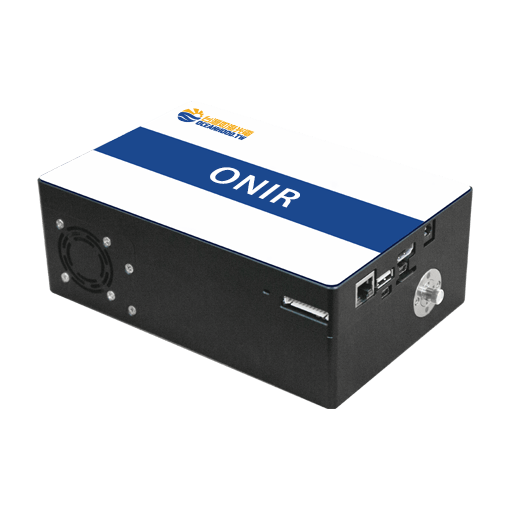
The ONIR High-Speed Near-Infrared Spectrometer is designed for high-precision spectroscopic measurement applications. Covering a spectral range of approximately 1290–1330 nm, it is optimized for the 1310 nm near-infrared region and combines high optical resolution, high-speed spectral acquisition, and real-time network communication to capture transient spectral changes with high accuracy.
Featuring a 10 μm precision slit and a high-performance optical design, ONIR delivers an optical resolution of approximately 0.4 nm, enabling clear differentiation of fine spectral features. With spectral acquisition speeds of up to 3000 fps, it is capable of real-time monitoring of laser wavelength drift, fiber optic component characteristics, and spectral changes in high-speed processes.
The system is equipped with Gigabit RJ45 Ethernet and a 24-pin expansion interface, supporting high-speed data transmission, remote control, and secondary development. These features enable seamless integration into various spectroscopy platforms and measurement systems for research, equipment integration, and in-line measurement applications.
ONIR is ideal for fiber optic communication component testing, laser wavelength monitoring, thin-film thickness measurement, near-infrared spectroscopy, and scientific research, providing a fast, stable, and accurate solution for near-infrared spectral analysis.
-
Features
- Optimized for the 1310 nm Band: Covers a spectral range of approximately 1290–1330 nm and is specifically designed for the 1310 nm near-infrared region, making it ideal for O-Band fiber optic communication and near-infrared spectroscopy applications.
- High optical resolution: Featuring a 10 μm precision slit and a specially designed optical system, the spectrometer delivers an optical resolution of approximately 0.4 nm.
- High-speed acquisition at 3000 fps: A high-speed electronic architecture enables spectral acquisition at up to 3000 frames per second, allowing real-time capture of millisecond-scale transient spectral changes.
- Flexible connectivity: Equipped with Gigabit RJ45 Ethernet and a 24-pin expansion interface, the system supports high-speed data transmission, remote control, and secondary development, enabling remote monitoring and real-time data visualization.
-
Applications
- Fiber optic communication component testing
- Laser wavelength monitoring
- Thin-film thickness measurement
- Near-infrared spectroscopy
- Scientific research
-
Specification
| Optical parameters | |
| Spectral range | Approx. 1290–1330 nm |
| Resolution | ~ 0.4 nm |
| Slit width | 10 μm |
| Fiber insertion repeatability | ≤7% |
| Functional parameters | |
| A/D sampling | 16 bit |
| Data interface | RJ45 Gigabit |
| Expansion interface | 24PIN |
| Acquisition modes | Single acquisition, continuous acquisition, software trigger, synchronous external trigger, asynchronous reset external trigger |
| Integration time | 100 µs-30 s |
| CCD dark noise1 | ≤30 |
| Spectral dynamic range2 | 3500:1 |
| Signal-to-noise ratio3 | 2000:1 |
| Response linearity4 | ≥99 % |
| Other parameters | |
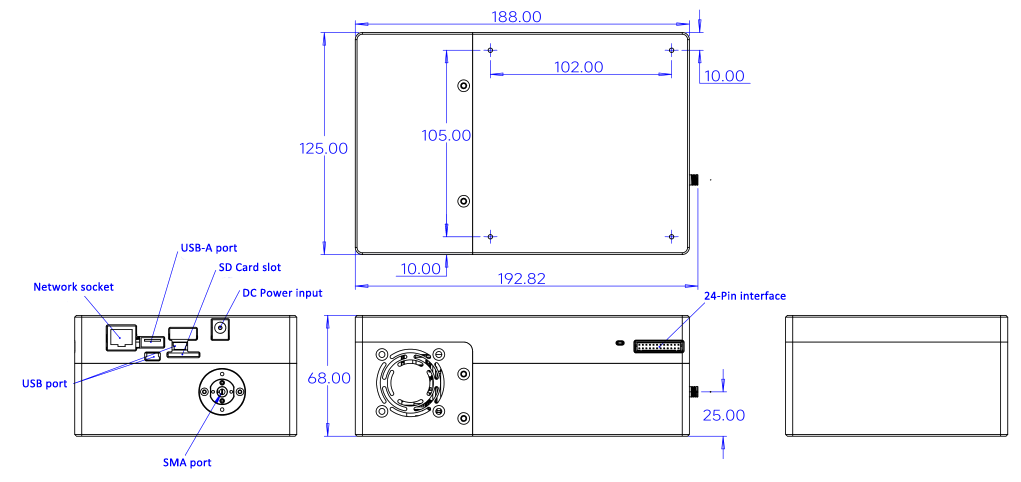
| Dimensions | 188×125×68 mm |
| Operating temperature | 0℃~40℃ |
| Operating humidity | 20%-85% |
| 1. CCD readout noise: RMS value of CCD readout noise at minimum integration time. 2. Spectral dynamic range: Calculated under minimum integration time as (Saturation value – Dark noise baseline) / Standard deviation of CCD readout noise. Evaluation method follows Oceanhood corporate standard. 3. Signal-to-noise ratio (SNR): Actual measured value according to Oceanhood’s internal evaluation standard. 4. Response linearity: Measured before calibration. |
|
-
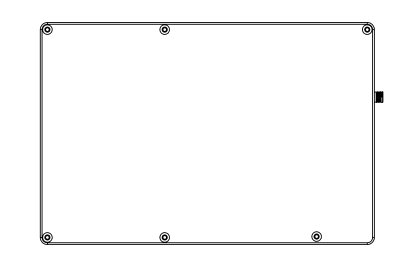
Dimensional drawing