
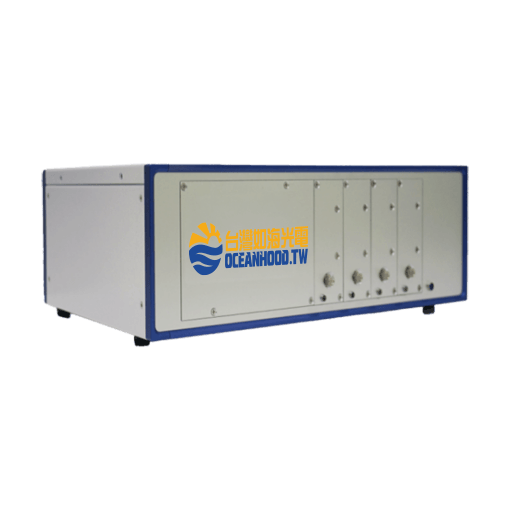
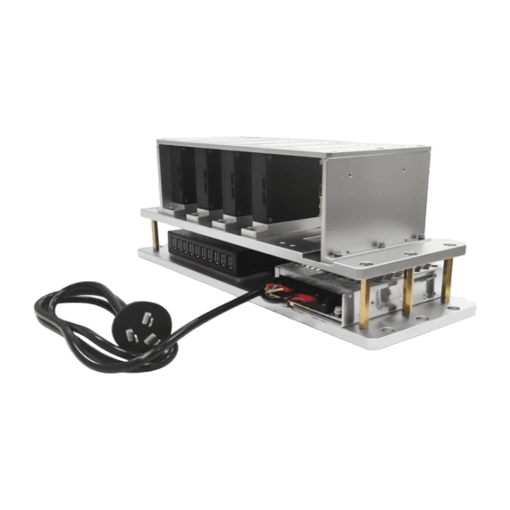
The Maria series multi-channel fiber optic spectrometer is a professional spectral analysis system designed for synchronized multi-channel spectral acquisition, covering wavelengths from ultraviolet (UV) to near-infrared (NIR).
The series is available in flexible 4-, 5-, and 8-channel configurations. Two form factors are offered to meet different application requirements: the Maria chassis-type system and the compact Maria-O model.
With synchronized multi-channel measurement, spectral fusion technology, and intelligent analysis software, the Maria Series is suitable for a wide range of applications, including advanced scientific research, industrial process monitoring, biomedical analysis, environmental monitoring, and material analysis, meeting the requirements of high-efficiency and high-precision spectral measurement.
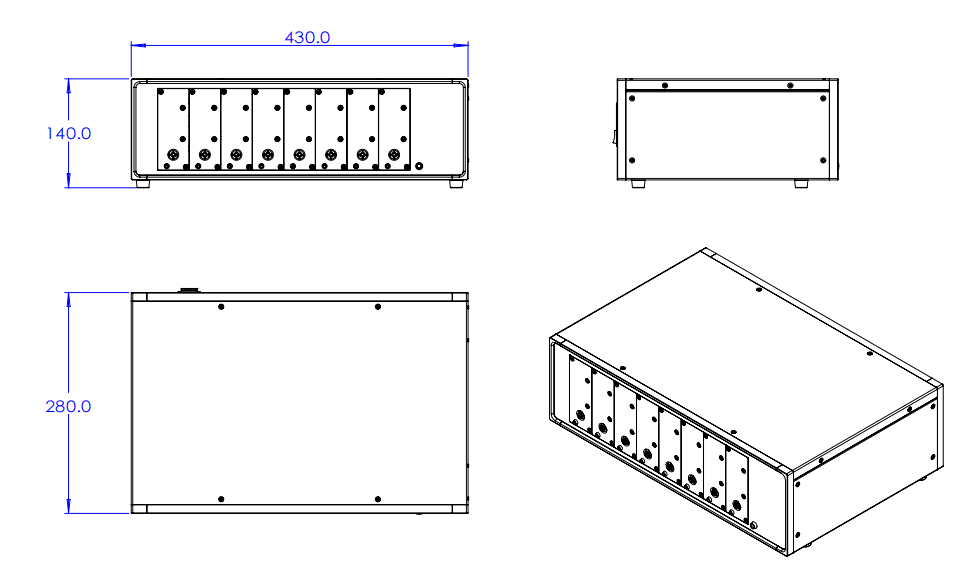
LIBS System Schematic Diagram
2. Metal material analysis
LIBS can be used for elemental composition analysis, defect detection, and surface coating analysis of metal materials, making it suitable for material research, development, and quality control.
3. Coal elemental analysis
Coal remains an important energy resource. LIBS technology enables real-time monitoring of pollutant elements throughout coal-fired power plant processes.
Compared with conventional heavy metal analysis methods, LIBS offers advantages including rapid measurement, non-contact detection, high precision, and real-time online analysis.
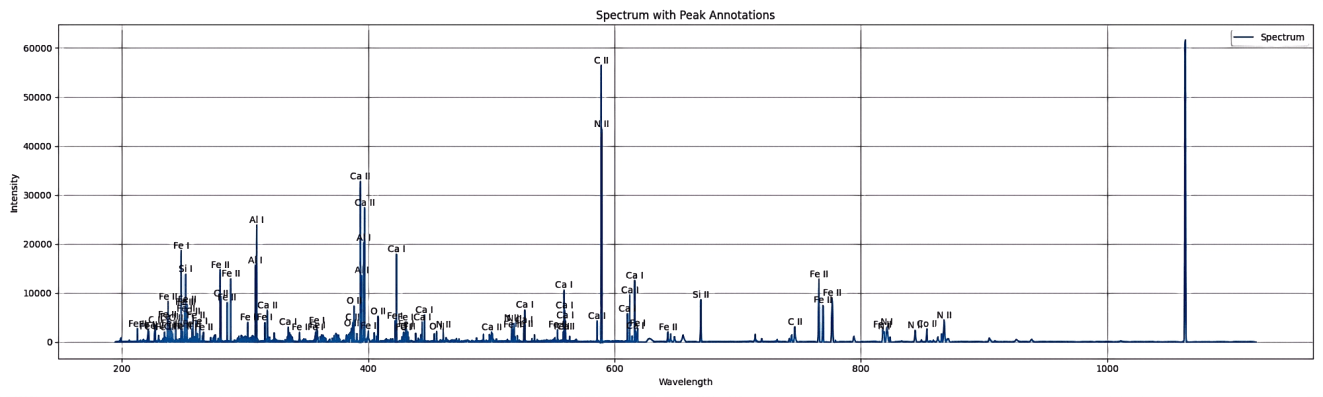
LIBS spectrum for elemental detection in Coal
4. Salt identification
LIBS enables rapid and non-destructive differentiation of various salts, such as potassium chloride (KCl) and sodium chloride (NaCl). Precise identification can be achieved directly through elemental characteristic spectra, eliminating complex sample pretreatment procedures and improving quality control efficiency in chemical and agricultural applications.
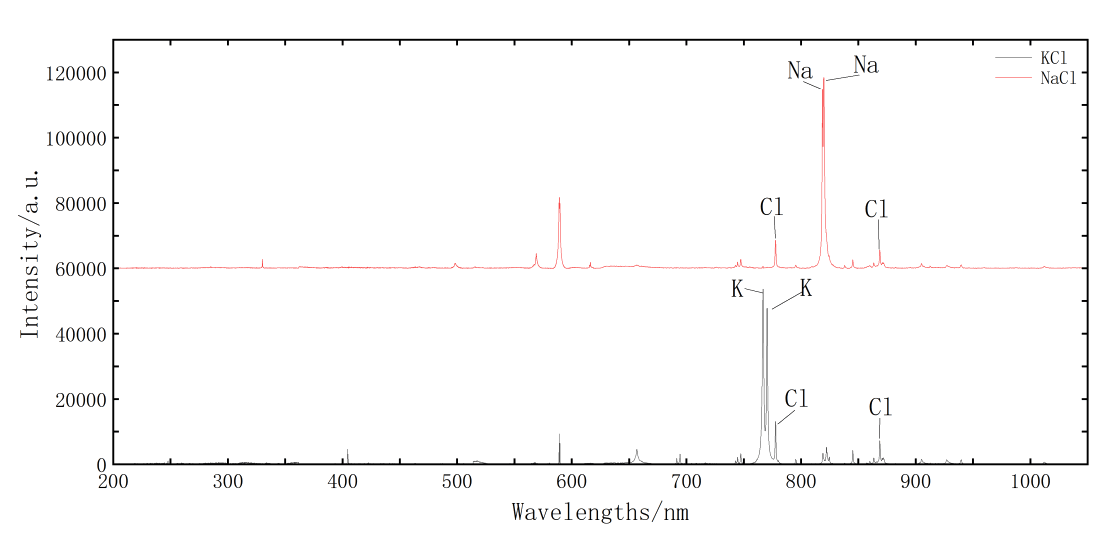
Spectra of potassium chloride and sodium chloride
5. Water quality monitoring
LIBS uses high-energy laser pulses focused on a water sample to induce plasma formation. The emitted spectra are then analyzed to detect heavy metal elements and contaminants in the water.
This technique is suitable for environmental monitoring, water quality analysis, and industrial wastewater testing.
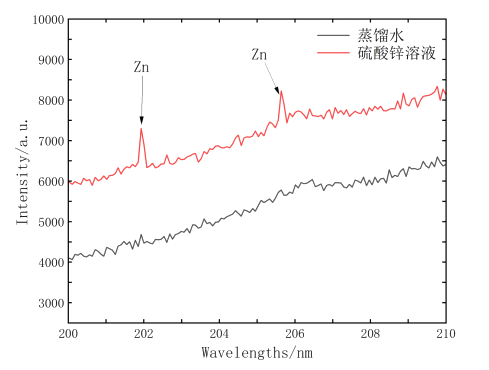
Spectra of distilled water and zinc sulfate solution
The series is available in flexible 4-, 5-, and 8-channel configurations. Two form factors are offered to meet different application requirements: the Maria chassis-type system and the compact Maria-O model.
With synchronized multi-channel measurement, spectral fusion technology, and intelligent analysis software, the Maria Series is suitable for a wide range of applications, including advanced scientific research, industrial process monitoring, biomedical analysis, environmental monitoring, and material analysis, meeting the requirements of high-efficiency and high-precision spectral measurement.
-
Features
- High spectral resolution, with an optimal FWHM of < 0.03 nm.
- High signal-to-noise ratio (SNR ≥ 450:1) and high dynamic range (≥ 3000:1), providing excellent weak-signal detection capability.
- Flexible multi-channel configurations with 4-, 5-, or 8-channel options.
- Supports segmented integration.
- Integrated high-stability temperature control system with a thermal drift of ≤ 0.1 pixel/°C; an optional heating module is available.
- Equipped with UspectralPlus spectral analysis software, integrating multiple smoothing, baseline subtraction, and peak identification algorithms.
- High-precision external trigger control allows the external trigger delay of each spectrometer channel to be configured independently.
-
Configuration
The actual spectral resolution does not exceed 120% of the specified value.
| Number of Channels | Wavelength Range | Spectral Resolution |
| 4 | 200–800 nm | 0.10–0.25 nm |
| 5 | 190–990 nm | 0.06–0.25 nm |
| 8 | 90–1030 nm | 0.06–0.20 nm |
-
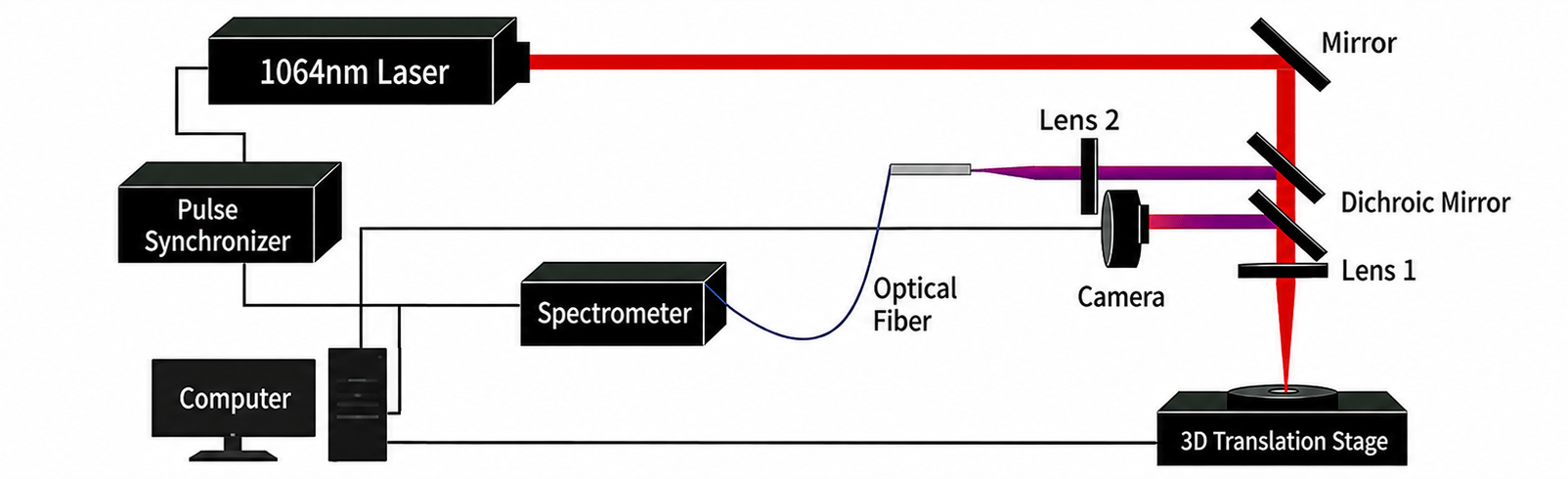
Dimensional drawing
Maria spectrometer
Maria-O spectrometer
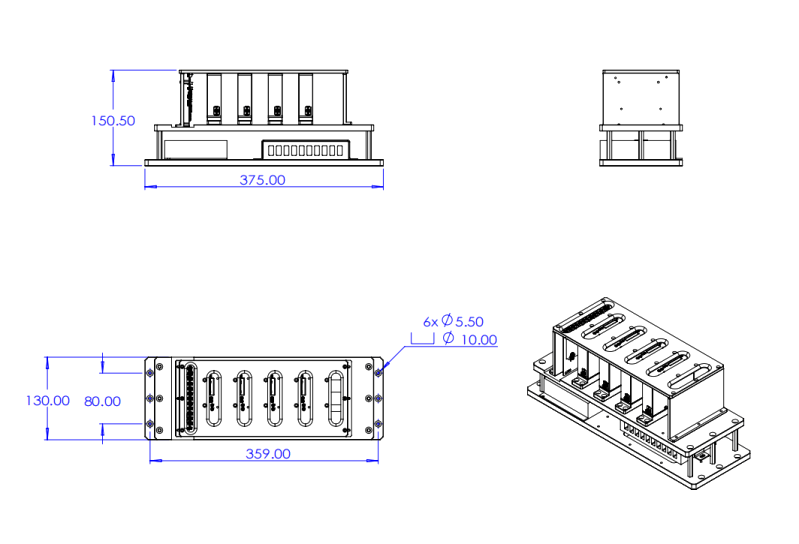
-
Applications
- Plasma spectroscopy
- Atomic emission spectroscopy (AES)
- Atomic absorption spectroscopy (AAS)
- Flame emission spectroscopy
- Laser-induced breakdown spectroscopy (LIBS)
- Laser spectral measurement
-
Application guide: LIBS
Laser-Induced Breakdown Spectroscopy (LIBS) is an elemental analysis technique that uses high-energy laser pulses to irradiate a sample and generate high-temperature plasma on the sample surface. By analyzing the characteristic atomic and ionic emission spectra generated during plasma cooling, LIBS enables rapid qualitative and quantitative elemental analysis.
LIBS System Schematic Diagram
LIBS spectra typically contain very sharp spectral peaks. Therefore, spectral data analysis requires advanced spectral processing algorithms, feature identification, and analytical modeling techniques.
Combined with a cloud-based LIBS spectral database and intelligent analysis algorithms, the system can improve data processing efficiency, simplify analytical workflows, and provide rapid and reliable elemental identification results.
Combined with a cloud-based LIBS spectral database and intelligent analysis algorithms, the system can improve data processing efficiency, simplify analytical workflows, and provide rapid and reliable elemental identification results.
-
Applications
1. Ore analysis
LIBS enables rapid analysis of the elemental composition and concentration of ores, including silicon (Si), aluminum (Al), iron (Fe), calcium (Ca), and trace elements such as lithium (Li) and beryllium (Be). It can be widely applied in non-ferrous mineral exploration, mining, and mineral quality analysis.
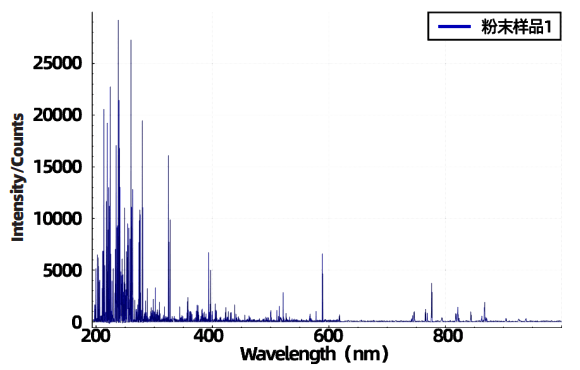
LIBS spectrum of non-ferrous ore powder
LIBS enables rapid analysis of the elemental composition and concentration of ores, including silicon (Si), aluminum (Al), iron (Fe), calcium (Ca), and trace elements such as lithium (Li) and beryllium (Be). It can be widely applied in non-ferrous mineral exploration, mining, and mineral quality analysis.
LIBS spectrum of non-ferrous ore powder
2. Metal material analysis
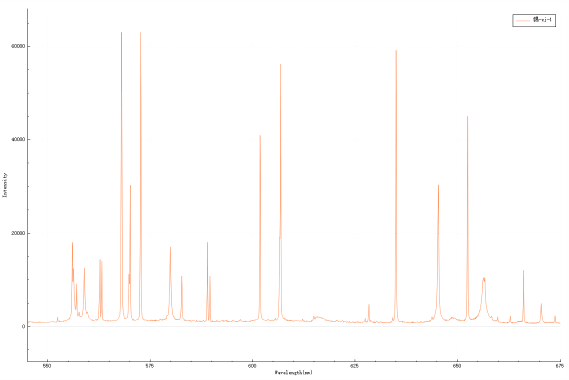
LIBS can be used for elemental composition analysis, defect detection, and surface coating analysis of metal materials, making it suitable for material research, development, and quality control.
 |
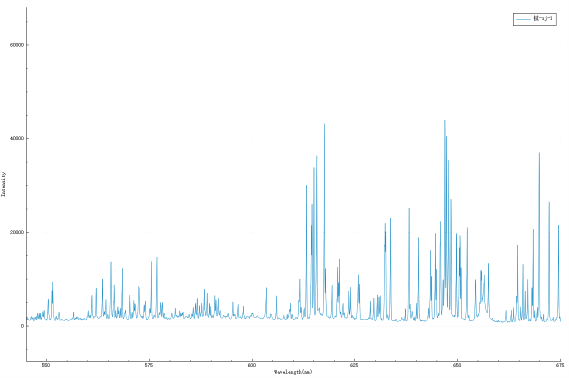 |
| LIBS spectrum of Tin | LIBS spectrum of Titanium |
3. Coal elemental analysis
Coal remains an important energy resource. LIBS technology enables real-time monitoring of pollutant elements throughout coal-fired power plant processes.
Compared with conventional heavy metal analysis methods, LIBS offers advantages including rapid measurement, non-contact detection, high precision, and real-time online analysis.
LIBS spectrum for elemental detection in Coal
4. Salt identification
LIBS enables rapid and non-destructive differentiation of various salts, such as potassium chloride (KCl) and sodium chloride (NaCl). Precise identification can be achieved directly through elemental characteristic spectra, eliminating complex sample pretreatment procedures and improving quality control efficiency in chemical and agricultural applications.
Spectra of potassium chloride and sodium chloride
5. Water quality monitoring
LIBS uses high-energy laser pulses focused on a water sample to induce plasma formation. The emitted spectra are then analyzed to detect heavy metal elements and contaminants in the water.
This technique is suitable for environmental monitoring, water quality analysis, and industrial wastewater testing.
Spectra of distilled water and zinc sulfate solution